


Computer Science & Engineering
Department of
Department Lead: Larry McMahan, PhD

Area of Research: Chair, Computer Science and Engineering, Quantum Physics, Quantum Computing, Machine Learning & Autonomous Vehicle Research
PhD, Electrical Engineering | Rice
MS, Rice University
BS, Physics and Math, Rice
35 years industry experience (25 @ Hewlett Packard)
Advisors & Principal Investigators

.jpg)
Marx Akl, PhD
AI-Driven Computational Science (Physics, Chem etc), Agentic AI, LLMs, RAG, Computer Vision, Materials Modeling, and Scientific Machine Learning
Dr. Marx Akl is a Computational Physicist, Principal Scientist, AI Research Advisor, and actively practicing AI scientist and engineer leading an AI-first research lab at the intersection of artificial intelligence, computational physics, materials science, engineering, and intelligent scientific systems. Every project within his lab—whether focused on physics, engineering, healthcare, molecular science, materials discovery, or predictive maintenance—is designed with a strong AI component at its core. Dr. Akl holds a Ph.D. in Physics from Rensselaer Polytechnic Institute, where his dissertation focused on The Mechanical Response of Materials at the Nanoscale via Simulations. He also holds Masters' degrees in Physics and Mechanical Engineering from RPI and the University of Southern California. With over a decade of experience as a scientist, machine learning engineer, and AI systems builder, Dr. Akl brings together deep scientific expertise and modern AI engineering to solve complex real-world problems.

Chris DeGrendele, PhD
Applied Physics and Mathematics
Chris DeGrendele is a computation scientist who received his Ph.D. in Applied Mathematics at the University of California Santa Cruz. He is currently a researcher at CalTech/JPL and NASA Ames Research Center in the Advanced Supercomputing Division - Computational Aerosciences Branch.

Pragati Dharmale
Electrical Engineering
Pragati Dharmale has 14 years of academia / industry research experience and received her M. Eng in Digital electronics and M.S. in computer science from Southern New Hampshire University, NH. Her research interest includes application of EEG analysis with machine learning (ML) and artificial intelligence (AI), as well as STEM based applications designed for Raspberry PI with Python programming.

Robert A. Downing
Data Science, Astronomy, Cryptography. Emeritus Chair, Computer Science & Engineering
Prof. Downing has 40 years of industry research experience from 3COM and IBM and as a former adjunct professor. The Downing research group applies the tools of data mining and data science to astronomy and cryptography. Through applied computer science and data science, the group hopes to move towards deciphering the Voynich manuscript and also detecting near-earth objects using signal-to-noise detection mining of NASA datasets. He is also the director for the Astrophysics Research Institute at ASDRP.

Joseph Laurienzo
Computer Science, Physical & Biological Systems Simulation
Joseph Laurienzo is an ambitious interdisciplinary scientist specializing in latent pattern recognition and simulation of physical and biological systems. Joseph received his BS in math and physics and MS in applied math from Case Western Reserve University, along with a BA in Japanese, and has collaborated with the University of Tokyo in condensed matter physics. Joseph’s research interests include the application of novel mathematical techniques in the assessment of brain activity patterns to construct cognitive models, as well as game theory. Joseph’s personal interests include world literature, Jiu Jitsu, and competitive Esports.

Dennis Liu
Director of IT; Mathematics & Computer Science
Mr. Dennis Liu is a product of Georgia Tech (MS Computer Science / Human Computer Interaction) and UC San Diego (BS Mathematics - Computer Science; BS Cognitive Science / Human Computer Interaction). Prior to joining us this spring in his new role, Dennis has previously served on ASDRP's admissions team, and will be assuming the role of Director of IT in addition to leading research groups at ASDRP in the fields of computer and cognitive science. Dennis comes to ASDRP with 8 years of IT experience - from UC San Diego Information & Technology Services as a Service Desk Technician, IBM Quantum as both a client facing technical support developer and software engineer, and more recently at VIZIO as a software engineer - prior to rejoining ASDRP.

Larry McMahan, PhD
Electrical Engineering, Computer Science
Dr. McMahan received his M.S. and Ph.D. from Rice University. His research group utilizes computer science modeling to understand phenomena at the quantum level and is interested in quantum computing applied to small molecule and single-atom perturbations, materials science and engineering, and chaos theory as it relates to chromodynamics and photophysical phenomena. Dr. McMahan oversees our quantum computing emulator.

Phil Mui, PhD
Computer Science, Artificial Intelligence, Computer-Human Interaction
Dr. Mui received his B.Sc., M. Eng, and PhD from the Massachusetts Institute of Technology (MIT) and an M.Phil from Oxford as a Marshall Scholar, and is currently a Senior Vice President of technology at SalesForce. The Mui group studies the impact of computer algorithms (particularly machine learning and artificial intelligence) on society at large. His recent students are engaged in research on algorithmic bias, AI ethics, data analyses of impact of the pandemic and the justice system on different groups around the world.

Suresh Subramaniam
Data Science
Suresh is a seasoned executive and data scientist with experience in managing large operations and applying data science to solve business problems. His group works on data science and its various applications to society, policy, and organizations.
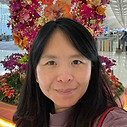
Huifang Qin, PhD
Data Science & Finance
Dr. Huifang Qin received her PhD in EECS from UC Berkeley. Huifang brings over 20 years of experience solving technology and business problems with data science. She led Data Science teams in autonomous driving, social media, digital advertising and finance technology companies to conduct research and build impactful products. Her group at ASDRP conducts finance research through practicing data science skills including data mining, statistical analysis, predictive modeling and optimizations.

Ruchik Thaker, MS
Applied Physics, Robotics & AI
With a career rooted in robotics, AI, and program management, Ruchik thrives on delivering innovative solutions that bridge cutting-edge technology with real-world applications. As a Technical Program Manager at NVIDIA, he has been instrumental in developing Isaac Sim and Isaac Lab, groundbreaking robotics simulation platforms that enable advanced AI applications and redefine the possibilities in automation and robotics. His professional journey spans impactful roles at NVIDIA, Amazon, Intel, Tesla, and GACL, where he has managed complex projects, streamlined processes, and driven collaborative efforts to bring transformative ideas to life. Whether it’s overseeing the launch of next-generation robotics platforms or enhancing operational efficiency through tailored solutions, he brings a blend of technical expertise, leadership, and innovation to every initiative.

Inbay Xie, PhD
Applied Physics, Mechanical and Thermal Engineering
Dr. Xie received his PhD, MEng, and BSc from Tianjin University, and has previously served as a co-Dean of Power Engineering at Tianjin University and has mentored over 90 postgraduate students in thermal physics, applied engineering, and materials science with over 80 publications in applied physics. Following his academic career, Dr. Xie worked as a visiting scholar at the University of Illinois, Urbana-Champaign, and subsequently as a principal test engineer at Sanhua Automotive developing new materials for vehicle parts in Tesla. Dr. Xie will be deploying this expertise in training students in materials physics and thermal physics.
Facilities & Instrumentation
Princeton Applied Research Scanning Potentiostat
Our Princeton Applied Research scanning potentiostat is utilized for electrochemical measurements and for monitoring of redox-active materials.

3D Printers
ASDRP operates four 3D printers for model production and for engineering and fabrication of turbines, components for hardware, and much more. Students learn how to operate the 3D printers and use cad software in the 3D printing course.

Quantum Computing Simulator Environment
Our server cluster operates a quantum computing emulator which allows research students and research groups to launch jobs that require QC applications.

Raspberry Pi systems
ASDRP has several raspberry pi miniature computers used in research students' projects.

High-Throughput Computing Server & Cluster
ASDRP operates four industry-grade Dell PowerEdge serves equipped with Xeon 48-core processors, over 64 GB RAM, and remote access to meet the needs of our computational students.

Laser Cutter
Our industrial-grade laser cutter is used for research students who construct and engineer components or models. It uses a high-power laser to cut wood, plastic, and other materials.

Former Advisors

Omar Amer, PhD
Civil Engineering
Omar is a professor in the Civil Engineering Department at Clemson University. Ph.D. from Clemson University and a Master's degree from San Diego State University. My research focuses on the sustainability of construction materials and finding beneficial uses of industrial wastes in construction.

Calvin Leung, PhD
Quantum Mechanics and Applied Physics
Calvin Leung pursued a PhD in physics at MIT studying the phenomena of fast radio bursts: brief, intense flashes of radio-frequency light originating from outside the Milky Way. His past research interests have included quantum communication and searching for dark matter using atomic clocks. In addition, he was a vibration engineer working on the Falcon 9 at SpaceX. Students interested in joining his group should reach out to him.

Prabin Lamichane
Data Science, Machine Learning & Statistics
Prabin Lamichhane collaborated on impactful research projects, delving into topics such as predictive modeling, natural language processing, and forensic analysis as well. As a data analyst at CNA Insurance, he honed his skills in data manipulation and interpretation. Prabin is experienced in utilizing a diverse set of tools, including Python, R, and SQL, to analyze large datasets, identify patterns, and develop data-driven strategies. Outside of the professional sphere, Prabin is an advocate for and actively participates in data science communities, attends industry conferences, and contributes insights to open-source projects.

Nicholas Papano
Mechanical Engineering, Physics, Computer Science
The Papano research group at ASDRP was interested in applying the tools of 3D printing and computer science towards applications in physics, engineering, and mechanical design. The group has been previously involved in aerodynamics research, using 3D printing to optimize turbine design - this summer he will be involved in capturing gigajansky radiobursts using a trans-national Raspberry Pi cluster.

Asmita Dani, PhD
Electrical Engineering, Applied Radiofrequecy Physics
Dr. Dani received her MS and PhD in electrical engineering from the University of Colorado. Her research interests involve using radiorequency (RF) physics to understand the world around us, and her research group at ASDRP applies a combination of hardware, software, and mechanical-electrical engineering to solve such problems.

Sam Fendell
Software Engineering, Machine Learning
Sam is a UC Berkeley graduate with several years experience as a software engineer at Google and Amazon. His group was interested in using machine learning to classify and analyze real-world problems - specifically, the utilization of machine learning to perform sentiment analysis on large datasets from social media platforms towards understanding how society responds to global events such as climate change and, more recently, COVID-19.

Valens Nteziyaremye, PhD
Mechanical Engineering
Dr. Valens Nteziyaremye was born in Kigali, Rwanda. In 2008 he was selected among the top students in science in Rwanda and received the Rwandan Presidential scholarship to study at the University of Arkansas at Little, USA in Systems Engineering Mechanical from the University of Arkansas at Little Rock.
He received his PhD and MS in Mechanical Engineering from the University of Florida where he worked on the interface of surface engineering for biomedical devices. He has worked for Intel, Tokyo Electron (TEL) and Lam Research Corporation.